Asset finance from a specialist non-bank lender often suits mining companies a bank would decline, because it is assessed against equipment security and production forecasts rather than historical financials alone. A traditional bank loan can still be the better fit for an established, well-capitalised business.
This article compares bank lending against specialist asset finance from a non-bank lender, so mining business owners understand where each option genuinely fits, illustrated with a real case study.
Key Takeaways
- Asset finance from a specialist non-bank lender tends to suit mining businesses with limited trading history, strong forecast production and owned equipment to secure against, particularly during a ramp-up phase when historical financials do not yet tell the full story.
- A traditional bank loan can still be the better fit for an established, well-capitalised mining business with a long trading history, consistent profitability and less urgency around timing.
- The right choice depends on trading history, available security, and how quickly funds are needed, not on one option being universally better than the other. Explore the full range of mining finance options to see what fits your business.
How Bank Lending Criteria Work
Major banks assess business lending primarily on historical financial performance. Credit teams want to see several years of audited financial statements, consistent profitability and a demonstrated trading track record before they will extend a facility of any size. This approach works well for businesses with a long operating history, but it creates a structural mismatch for many mining companies.
A mining business moving through exploration into production commonly has a thin trading history relative to the scale of finance it needs. Ramp-up phases also tend to involve genuine cash burn, as capital is spent on plant, equipment and site development ahead of consistent revenue. On a bank’s historical financials, this can look like a business under financial pressure rather than one investing in a near-term production outcome.
Banks are also generally reluctant to place significant weight on forward-looking production forecasts, even when those forecasts are prepared by qualified mining engineers or geologists. A bank credit committee is typically mandated to lend against what a business has already demonstrated, not what it expects to earn once a mine reaches steady-state production. That mismatch is where many otherwise viable mining businesses find themselves declined by mainstream lenders.
What a Specialist Non-Bank Lender Assesses Differently
Specialist non-bank lenders take a different approach to assessing a mining finance application. Rather than relying solely on historical trading results, a specialist lender will weigh a mine’s forecast production and cash flow alongside the underlying business fundamentals. This does not mean forecasts are accepted uncritically, but they are treated as relevant evidence rather than disregarded outright.
Equipment and asset security sit at the centre of how these facilities get structured. If a mining business already owns plant or mobile equipment outright, that equipment can often stand as security for a new facility, sometimes through a sale-and-leaseback that releases capital while the business keeps the gear working day to day. It lets a lender manage risk through something tangible, rather than leaning purely on financial history.
Speed is another point of difference. A specialist non-bank lender working exclusively in asset and equipment finance can often move an application through assessment faster than a generalist bank credit team, partly because the assessment process is built around equipment valuation and forecast review rather than a standardised retail lending process. For a mining business that needs to fund a mine plan before certain windows close, this speed can matter as much as the approval itself.
Not sure which category your business falls into? Talk to our team about your specific situation.

Side-by-Side Comparison
The table below summarises how bank lending and specialist non-bank asset finance typically differ across the criteria mining business owners care about most. These are general process and criteria differences only, since actual rates, fees and approval timeframes vary by lender and by application.
| Criteria | Traditional Bank Loan | Specialist Non-Bank Asset Finance |
|---|---|---|
| Approval criteria | Weighted heavily towards audited trading history, consistent profitability and a clean balance sheet across several full financial years. | Weighted towards the value and condition of the equipment offered as security, alongside forward-looking production and cash flow forecasts. |
| Speed | Credit committee approval typically involves several layers of review, and timeframes stretch out further if the file needs referral to a specialist mining credit team. | A smaller specialist team, already familiar with mining assets and cash flow cycles, usually handles the assessment, which shortens the path to a decision. |
| Security required | Often looks for a mix of security, which can include real property or director guarantees, in addition to any equipment being financed. | Can be structured primarily against the equipment itself, such as owned plant or mobile fleet, which may reduce the need for property as additional security. |
| Flexibility | Loan structures tend to follow standardised bank products with limited scope to tailor repayments around a mine’s production ramp-up or seasonal cash flow. | Facilities can be structured around the operational reality of a mining business, including rolling arrangements that are reviewed and renewed periodically. |
Two things are worth keeping in mind when reading this comparison. First, individual banks and individual non-bank lenders vary, so these are general tendencies rather than fixed rules that apply to every lender on every application. Second, the best-fit option depends on where a mining business sits in its lifecycle, which is why the next two sections look at both sides of that decision.
When a Bank Is Still the Right Answer
None of this means a bank is the wrong choice for every mining business. An established operation with a long trading history, consistent profitability and a well-capitalised balance sheet is often precisely the profile a bank is built to lend to. Where a business already meets standard bank criteria comfortably, a bank facility can be a straightforward and appropriate option.
A bank can also make sense where there is less urgency around timing, allowing a longer credit approval process to run its course without holding up equipment purchases or production plans. Businesses in this position are not the primary audience for specialist asset finance, and a mainstream bank relationship may continue to serve them well as they scale further.
A Concrete Comparison
A recent Dark Horse Financial case study illustrates the gap between these two approaches in practice. A mining business forecasting strong profit approached major banks for finance and was declined by each of them, despite the strength of the forecast. The banks’ concerns centred on the business’s thin trading history and a period of historical cash burn during ramp-up, both of which sat outside standard bank lending criteria regardless of the forecast.
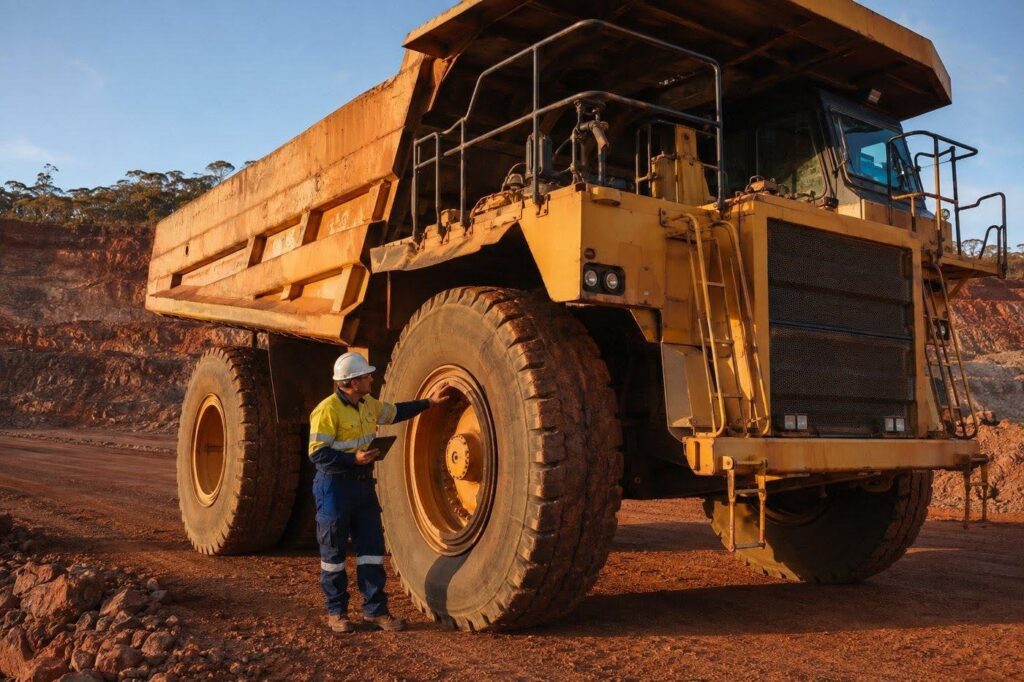
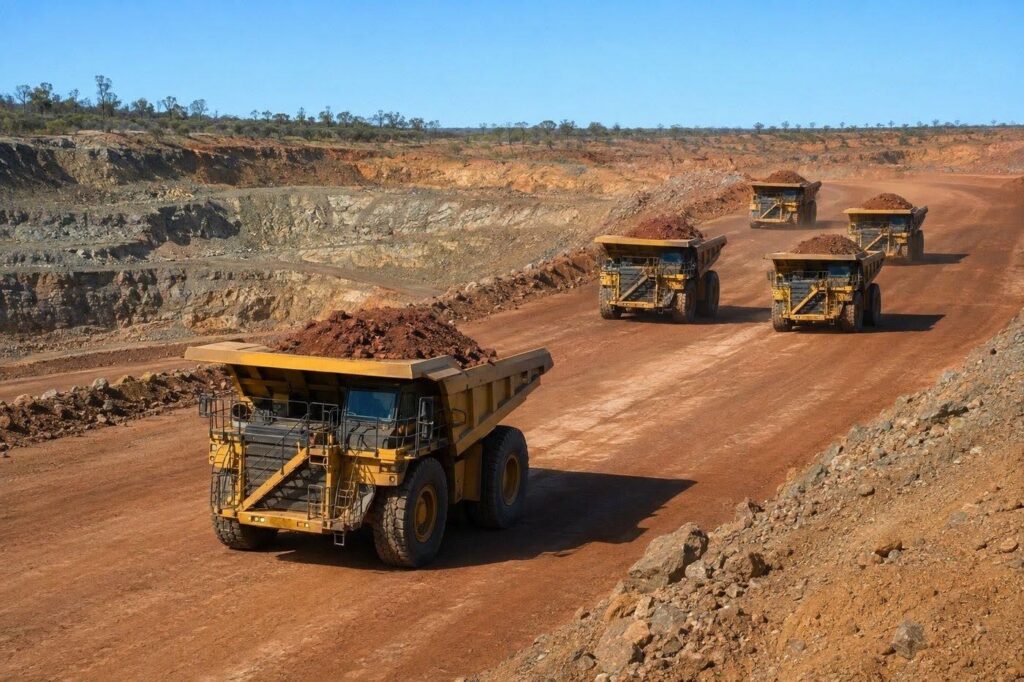
Dark Horse Financial took a forecast-aware, asset-based approach instead. The business already owned five Caterpillar 777 dump trucks outright, and Dark Horse arranged a $7.8 million facility secured against those trucks at an 80% loan-to-value ratio, structured so the business kept operating the equipment throughout. The forecast was treated as relevant context for the mine’s trajectory, while the equipment itself provided the tangible security the facility was built around.
| $7.8M | 80% | 5 |
|---|---|---|
| Facility arranged | Loan-to-value ratio | Cat 777 dump trucks |
This is one deal, not a guarantee of how every application will be assessed, and outcomes always depend on the specifics of the business and the equipment involved. It does show why a forecast-aware, asset-secured structure can reach a different outcome to a bank process built around historical financials alone.
Businesses considering owned plant as security can read more on the Mining Equipment Finance hub, or explore the broader mining finance options Dark Horse arranges across the sector.
If your business doesn’t yet own the equipment it needs, our rent-to-own equipment finance option can help you build toward ownership over time.
Frequently Asked Questions
Asset finance suits mining businesses with limited trading history, cash burn during ramp-up, or strong forecast production that a bank will not rely on for its historical-financials-based assessment. It lets equipment already owned by the business support a new facility. For an established, well-capitalised business with a long trading history, a bank loan may remain equally or more suitable.
Pricing on any facility comes down to the risk involved and how quickly a decision and settlement can be delivered, not simply whether the lender is a bank or a non-bank. A specialist lender assessing a thinner trading history or a forecast-heavy application may price differently to a mainstream bank loan for an established, low-risk business. Every application is priced on its own merits, so a fair comparison should be based on the actual offers received.
Refinancing existing equipment finance or a bank facility into a specialist asset-based structure is possible in many circumstances, particularly where owned equipment can support a new facility. Suitability depends on the equipment’s value, condition and any existing security already registered against it.
Every mining business’s finance needs are different, and the right structure depends on trading history, available security and how quickly funds are needed. Get in touch with Dark Horse Financial for an obligation-free assessment of both bank and non-bank pathways.
* Disclaimer: Loans and the benefits associated with them are only available to those who have been approved. The information provided on this page is general and does not consider your individual circumstances. It is not meant to serve as a substitute for professional advice, and you should not rely on it for any decisions. Always consult with a professional regarding finance, tax, and accounting matters before making any choices or taking action.