Heavy machinery finance allows Australian businesses to acquire excavators, cranes, trucks and other high-value equipment without tying up working capital in the full purchase price, but approval depends on a business meeting the criteria a lender sets for that particular asset and that particular borrower. This article explains which qualification criteria lenders assess when considering a heavy machinery or heavy equipment finance application, and what a business can do before applying to put forward a stronger case.
Dark Horse Financial is a finance broker, not a lender. We are Credit Representative No. 465 325 of Buyers Choice Licencing Pty Ltd (Australian Credit Licence No. 509484), and we arrange finance through a large panel of lenders spanning banks, non-bank lenders and private financiers.
Key Takeaways
- Heavy machinery finance lets a business acquire equipment over time, with the equipment itself usually acting as security for the facility.
- Finance limits of up to $1 million can be accessed on a bank statement assessment alone, without the need to provide financials.
- Chattel mortgages, finance leases and hire purchase agreements differ in who owns the equipment and how GST and tax deductions are treated.
- Lenders generally assess ABN and GST registration, trading history, credit history, deposit or equity, the equipment itself and the business's financial documents.
- Criteria vary from one lender to the next, so matching the application to a lender whose policy suits the business is often the deciding factor.
- Options exist for start-ups, for borrowers with impaired credit and for older or second-hand machinery, although terms will reflect the added risk.
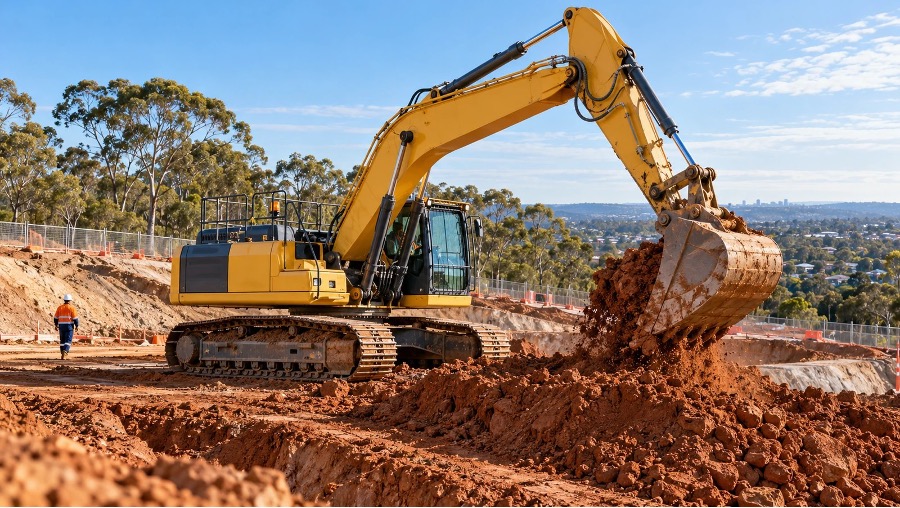
What Is Heavy Machinery Finance?
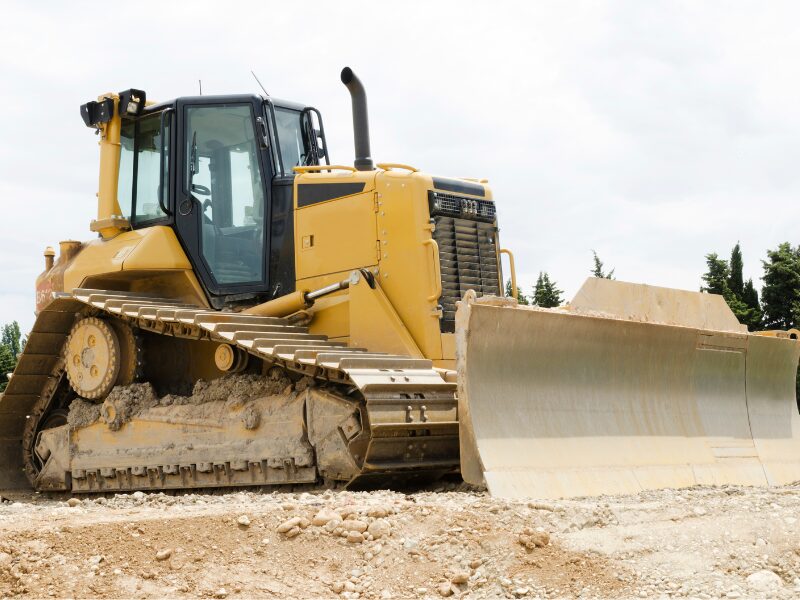
Heavy machinery finance is a form of business lending designed to help companies acquire large, high-value equipment such as excavators, bulldozers, cranes, loaders, dump trucks, and agricultural or manufacturing machinery without paying the full purchase price upfront. The equipment being purchased usually serves as security for the facility, although some lenders will also take the borrower’s broader asset position into account when assessing the application.
Because the asset itself carries much of the risk, heavy equipment financing is often more accessible than an unsecured business loan of a similar size, and repayments can be structured over a term that aligns with the working life of the machine and the income it generates. This allows a business to put new or second-hand equipment to work immediately while preserving cash flow for wages, fuel, materials and other operating costs.
In Australia, heavy machinery finance is offered by banks, non-bank lenders and private financiers, and each applies its own credit policy. Dark Horse does not lend directly; we arrange finance by matching a business with a lender on our panel whose criteria suit its circumstances. For a broader introduction, see our guide on how to qualify for equipment financing.
The structure of a facility affects who owns the equipment, how repayments are treated for tax purposes and what happens at the end of the term. The three most common heavy equipment financing options in Australia are set out below.
| Structure | Who Owns the Equipment | Typical Use Case | Tax Treatment |
|---|---|---|---|
| Chattel Mortgage | The business owns the equipment from settlement. The lender takes a mortgage over the equipment as security until the loan is repaid. | Businesses that want ownership from day one, are registered for GST and want to claim depreciation. | Interest and depreciation are generally deductible to the extent the equipment is used in the business. A GST-registered business can generally claim the GST credit on the purchase price in the BAS period of purchase. |
| Finance Lease | The financier owns the equipment and leases it to the business for an agreed term, often with a residual payment at the end. | Businesses that prefer to preserve capital or that upgrade equipment regularly. | Lease payments are generally deductible to the extent the equipment is used in the business. GST credits are claimed on each lease payment, and any residual payment to take ownership is treated as a separate purchase. |
| Hire Purchase | The financier owns the equipment until the final instalment is paid, at which point ownership passes to the business. | Businesses that want eventual ownership without a large upfront outlay. | For agreements entered into on or after 1 July 2012, the full GST credit can generally be claimed upfront, including on the credit component. The business can generally claim depreciation and the interest component. |
Tax treatment depends on the circumstances of each business, including whether it accounts for GST on a cash or accruals basis, so the table should be read as a general guide only and confirmed with an accountant before a structure is chosen. For the current instant asset write-off threshold and depreciation rules, refer to the ATO’s guidance at ato.gov.au.
Two other structures are worth knowing about. Under an operating lease the equipment goes back to the financier when the term ends, and rent to own works a little differently again, with part of every rental payment going towards the purchase price so the business can buy the machine outright at the end of the term if it chooses to. Both can suit a business that would prefer to keep equipment costs within its operating budget than carry a loan on the balance sheet.
Heavy Machinery Loan Qualification Checklist
Every lender on our panel works to its own credit policy, however the core criteria do not change a great deal from one lender to the next and the checklist below covers the points almost every application will be assessed on, so it is a useful way to gauge how your business is likely to be viewed before you apply.
- Active ABN and GST registration. Lenders require an Australian Business Number, and most also require the business to be registered for GST. A longer registration history generally widens the range of lenders available.
- Trading history. There is no fixed minimum trading period across the panel, and newer businesses can still qualify, with options available to start-ups through some lenders, although a newer business may need to make a contribution towards the purchase. The longer a business has been trading, the wider its choice of lenders will generally be.
- Credit history. Lenders look for a clean credit file for both the business and its directors, with no recent defaults, judgments or unpaid tax debts that have not been addressed. There is no single minimum score that applies across the panel, as each lender sets its own threshold, and bad credit equipment finance options are available where a credit file is less than perfect.
- Deposit or equity contribution. Many lenders on our panel do not require a deposit from an established business, while newer businesses may need to contribute towards the purchase, typically with a deposit of 10 to 20 per cent.
- Equipment age and type. Because the equipment forms the security, lenders assess its age, condition and resale value. Some lenders prefer newer, well-maintained machinery with a strong resale market, while others will consider older equipment with no age restriction, although older or highly specialised machinery may attract a shorter term.
- Financial documentation. The documents required depend on the size of the facility. For loans up to $350,000 there are options without income verification, and facilities of up to $1 million can be assessed on a read-only view of the business’s bank statements alone, without financials. Some lenders will ask for financials, BAS, an asset and liability statement and a schedule of existing commitments at different levels.
A business does not need to be strong on every point to be approved, as a weakness in one area can often be offset by strength in another, such as a substantial deposit balancing a shorter trading history. Because criteria vary from lender to lender, the outcome often depends on matching the application with the one lender whose policy fits the business’s circumstances, which is where a broker with a large panel of lenders adds value. When you are ready to compare the structures and lenders available, you can explore equipment finance options suited to your business.
How to Apply for Heavy Machinery Finance: Step-by-Step
Once you have assessed your business against the checklist, the application process generally follows five steps.
- Confirm the equipment and the total cost. Identify the machine you need, whether it is new or second-hand, and obtain a quote or tax invoice from the dealer or private seller. Include delivery, fit-out and any attachments in the total so the facility covers the full cost. You can estimate your repayments using our equipment finance calculator.
- Gather your business details and financial documents. Have your ABN, GST registration details, trading history and identification for each director ready, along with the bank statements or financials relevant to the size of the facility. Preparing these upfront avoids delays once the application is with a lender.
- Get matched to a suitable lender on the panel. We assess your circumstances against the credit policies of the lenders on our panel and identify the lender whose criteria best suit your business, the equipment and the amount required, so that your application is presented once, to the right lender.
- Compare the structure and terms offered. Review the structure, term, repayment amount, any residual or balloon payment, fees and conditions before you accept. This is also the point to confirm the tax treatment of the chosen structure with your accountant.
- Settle and take delivery. Once the documents are signed and settlement conditions are met, the lender pays the supplier directly and you can take delivery of the equipment and put it to work.
Common Mistakes That Delay Heavy Machinery Loan Approval
Most delays in heavy machinery finance trace back to one of the criteria in the checklist above, which is why preparation before applying tends to make the greatest difference to how quickly an application moves.
An incomplete or incorrect tax invoice is the most common cause of delay. Lenders will not settle until the invoice from the dealer or seller matches the application exactly, so a tax invoice with the wrong entity in the billed to or delivered to details, or one that is missing the year of manufacture or the VIN or serial number of the machine, will usually be sent back for correction before funds can be released, which can hold up settlement even after the finance has been approved.
Incomplete supporting documents can also slow an application down. Where a lender asks for current bank statements, recent BAS or an asset and liability statement, supplying everything at the outset avoids requests for further information that add time to the assessment.
Choosing a structure without comparing the alternatives can cause problems later. A chattel mortgage, finance lease and hire purchase agreement each carry different ownership and tax consequences, and selecting one without reference to the table above, or without advice from an accountant, can mean a structure that does not suit the business’s tax position or plans for the equipment.
Finally, approaching a single lender and treating a decline as the end of the matter is a costly mistake. A decline usually means the application did not fit that lender’s policy, not that the business cannot be financed, and submitting multiple applications to different lenders without guidance can result in several credit enquiries that weaken the credit file further.
Heavy Machinery Finance vs Other Asset-Secured Business Loans
Heavy machinery finance is one form of asset-secured lending, where the equipment being purchased provides the lender’s security. It is designed for acquiring a specific asset, and the facility is generally tied to that asset for its term.
Businesses that already own equipment, vehicles, property or other assets may also be able to use those assets more broadly to secure finance for purposes other than buying new machinery. This could include funding working capital, covering a seasonal shortfall, paying down a tax debt or supporting growth, with the existing assets providing the security rather than a new purchase.
The distinction matters because the right facility depends on what the business needs the funds for. A business purchasing a new excavator will usually be best served by equipment finance, whereas a business with a paid-off fleet that needs cash flow may be better suited to a facility secured against the equipment it already owns. If your business holds assets that could support a broader funding requirement, our page on asset-based loans explains how these facilities work and what lenders look for.
Conclusion and Next Steps
Qualifying for heavy machinery finance comes down to four core areas: the business’s trading history, the quality of its documentation, its credit standing and the equipment itself. A business that is prepared on each of these points will generally move through the approval process more quickly and on better terms.
Because these criteria differ from one lender to the next, a decline from a single lender does not mean the business cannot be financed. Working with a broker who has access to a large panel of lenders gives a business the best chance of being matched with the lender whose policy fits its circumstances, rather than having its search end with one rejection. Dark Horse has been trading for more than 10 years and has helped more than 1,000 Australian businesses secure funding. If you are planning a heavy machinery purchase, Speak with our team to discuss your requirements.

Frequently Asked Questions
Requirements vary by lender across our panel and no single minimum score applies to every application. Most lenders look at the whole credit file for the business and its directors, including any defaults, judgments or unpaid debts, and a score on its own is rarely the deciding factor. Borrowers with impaired credit still have options, though pricing will generally reflect the higher risk.
Newer businesses face closer scrutiny, but they may still qualify through low-doc or alternative lenders on our panel. Lenders will usually place more weight on the directors’ industry experience, their personal credit history, any contracts already secured and the value of the equipment. A start-up may also need to make a contribution towards the purchase.
Deposit requirements vary by lender, by the age and type of equipment and by the structure chosen. Many lenders do not require a deposit from an established business purchasing equipment with a strong resale market. Newer businesses may need to contribute part of the purchase price, typically a deposit of 10 to 20 per cent, while solutions are available for older or specialised machinery that do not require a deposit.
The main difference is ownership, as the comparison table above shows. Under a chattel mortgage the business owns the equipment from settlement and the lender holds a mortgage over it, whereas under a finance lease the financier owns the equipment and the business leases it for an agreed term. The two structures are also treated differently for GST and tax purposes.
Yes, although the age and condition of the equipment will affect lender appetite and the terms offered. Some lenders prefer newer machinery with a strong resale value, while others will finance older or second-hand equipment, including private-sale purchases, without age restrictions. Older equipment may attract a shorter term, although solutions are available that do not require a deposit.
Sources and Methodology
This article was prepared using Dark Horse Financial’s knowledge of the lending criteria applied by lenders on its panel, together with current guidance published by the Australian Taxation Office. GST treatment of hire purchase and lease agreements was checked against the ATO’s guidance on GST, hire purchase and leasing, and depreciation and write-off rules should be confirmed with the ATO’s instant asset write-off guidance. Lending criteria change over time and differ between lenders.
Disclaimer
The information in this article is general in nature and does not take into account your objectives, financial situation or needs. It is not financial, tax or legal advice. You should consider seeking independent professional advice before making any decision about finance. All finance is subject to lender approval, terms and conditions, fees and charges. Dark Horse Financial Pty Ltd is a Credit Representative No. 465 325 of Buyers Choice Licencing Pty Ltd.