Key Takeaways
- The rate a lender offers on heavy equipment comes down to a handful of things, mainly the age and type of machine, the term, how the business has traded and what is securing the loan.
- Any rate range you see published is indicative only, because the rate a business is actually offered depends on its own circumstances and the lender's policy at the time it applies.
- Heavy equipment finance, including chattel mortgages, is typically written at a fixed rate for the full term, so repayments stay the same from start to finish.
- Having your application matched to the lender whose policy suits your asset and profile can make a meaningful difference to the total cost of the finance.
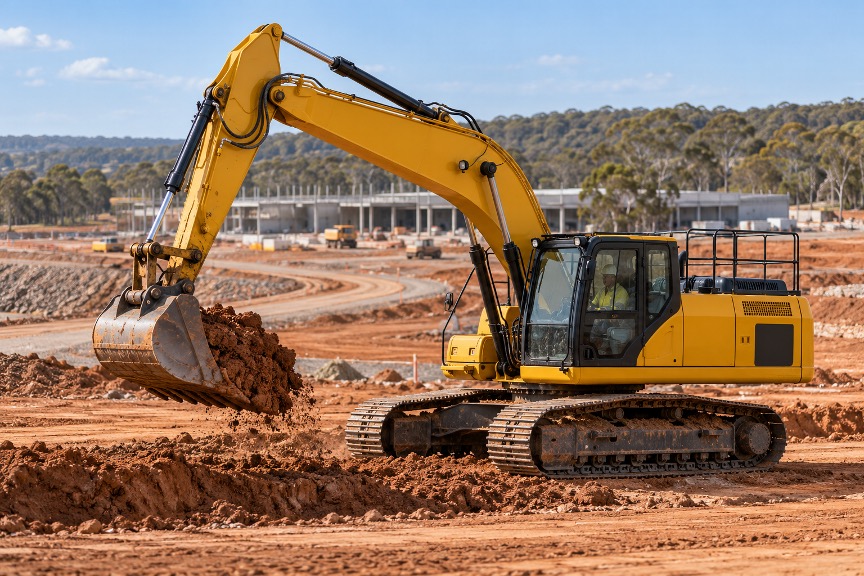
Understanding heavy equipment loan interest rates in Australia starts with recognising that there is no single rate for an excavator, a prime mover or a header, and that the figure a business is offered reflects how a lender views both the asset and the business behind the application. This guide explains what drives heavy equipment loan interest rates, how lenders weigh those factors, and what a business can do to position itself for a more competitive rate before it applies.
Dark Horse Financial is a finance broker, not a lender. Dark Horse Financial Pty Ltd is a Credit Representative (No. 465 325) of Buyers Choice Licencing Pty Ltd (Australian Credit Licence No. 509484), and we arrange equipment finance through a large panel of lenders spanning the major banks, non-bank lenders and private financiers.
That distinction matters because rates vary meaningfully by lender, asset type, loan term and applicant profile. A single lender’s rate card only shows how that one lender prices risk, and it says very little about whether another lender with a different appetite would see your application in a better light.
What Is Heavy Equipment Finance and How Does It Work?
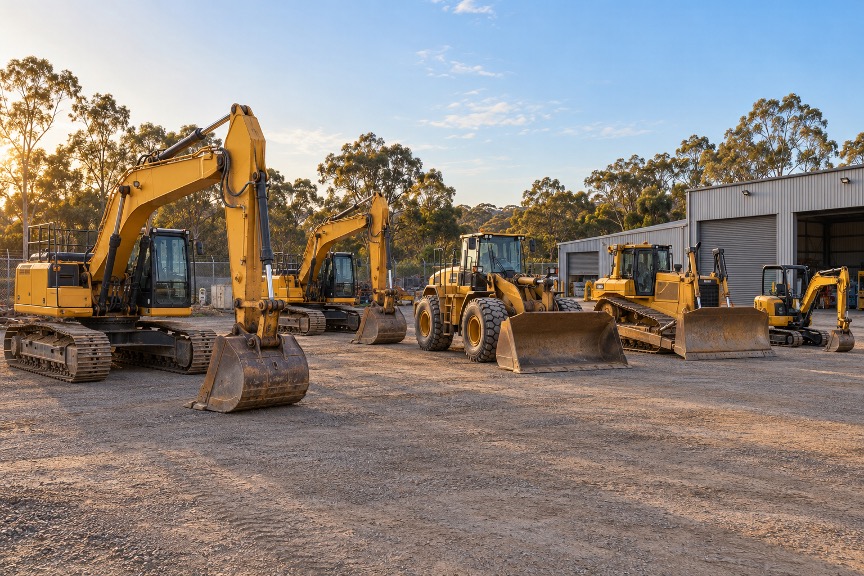
Heavy equipment loans, also referred to as heavy equipment finance, allow a business to acquire machinery, vehicles or plant without paying the full purchase price upfront. They are used to fund a wide range of assets, including excavators, bulldozers, loaders, cranes, trucks, forklifts, and agricultural and manufacturing equipment, with the cost spread over a set term so that working capital remains available for wages, fuel, materials and the other day-to-day costs of running the business.
In Australia, heavy equipment finance is typically structured in one of three ways:
- Chattel mortgage: the business takes ownership of the equipment at the time of purchase, and the lender holds a mortgage over it as security until the loan is repaid.
- Finance lease: the lender owns the equipment and leases it to the business for an agreed term, generally with a residual value payable at the end.
- Hire purchase: the lender buys the equipment and the business hires it, with ownership passing to the business once the final payment is made.
In most cases the equipment itself secures the finance. Because the lender holds security over an asset with a resale value, equipment finance is generally priced differently from unsecured business lending, where the lender relies on the cash flow of the business and the director’s guarantee.
Most businesses use equipment finance to protect cash flow and to get more productive machinery working sooner, with repayments set to suit the way the equipment earns its keep. Interest on finance used for business purposes may also be tax deductible, which is something your accountant can confirm for your own circumstances.
What Factors Influence Heavy Equipment Loan Interest Rates?
Every lender assesses heavy equipment finance against its own credit policy, which means the same application can be priced quite differently depending on where it is submitted. Because Dark Horse arranges finance across a large panel of lenders rather than offering a single rate card, we see first-hand how the weight given to each of the factors below differs from one lender to the next, and that is precisely why matching the application to the right lender matters.
| Factor | How It Affects Your Rate |
| Asset age and condition | Newer equipment generally attracts lower rates because it holds its value and gives the lender stronger security. Older or high-hour machinery can still be financed, and some lenders specialise in older and specialised equipment, although pricing tends to reflect the additional risk. |
| Loan term | A shorter term generally reduces the total interest paid because the balance is repaid sooner, although repayments are higher. A longer term eases monthly repayments but increases the total interest paid over the life of the finance. |
| Deposit or trade-in | A deposit or trade-in reduces the amount financed and the lender’s exposure, but it does not typically change the rate offered. Its benefit is lower repayments and less total interest. Many established businesses can finance without a deposit, while newer businesses may need a contribution of typically 10 to 20 per cent. |
| Credit history and time trading | Clean business and director credit files, together with a longer trading history, generally indicate lower risk and are priced accordingly. Younger businesses can still qualify, and some lenders assess applications on bank statements alone up to $1 million. |
| Security type | Where the equipment itself secures the finance, rates are generally lower than for unsecured lending. Additional security, such as other business assets or property, will not necessarily lower the rate, but it can strengthen an application where there is something to mitigate, such as a past credit issue or earlier signs of financial difficulty in the business. |
Outside the application itself, lenders’ own funding costs move roughly in line with the Reserve Bank of Australia’s cash rate, so pricing on equipment finance can change from one quarter to the next even when nothing about the business has changed. Funding costs can also rise independently of any RBA decision, because when broader economic conditions deteriorate lenders generally pay more for the money they lend and that cost tends to flow through to the rates they offer. Appetite also varies by industry. Some lenders actively look for construction, transport or agricultural equipment and others are more cautious with exactly the same assets.
Typical Interest Rate Ranges for Heavy Equipment Loans in Australia
Published rate ranges for heavy equipment finance are often quoted without a date or a source, and they date quickly as lenders reprice in response to changes in their own funding costs. For that reason we do not publish a typical rate range in this guide. Any figure we quoted would be indicative at best and could not tell you what your business would actually be offered, which depends on the factors set out in the table above and on the specific lender selected.
What can be shown with confidence is how much a difference in rate affects the total cost of the finance. The example below uses illustrative rates only. It is not a quote and does not reflect current market pricing.
| $100,000 over 5 years (illustrative) | Monthly repayment | Total interest |
| 8.00% p.a. | $2,027.64 | $21,658 |
| 9.00% p.a. | $2,075.84 | $24,550 |
| Difference | $48.20 | $2,892 |
Assumes principal and interest repayments made monthly in arrears, with no balloon or residual, and excludes fees and charges.
A one percentage point difference adds close to $2,900 in interest over five years on a $100,000 loan, and for a business financing a fleet or several machines that figure multiplies quickly. Even so the headline rate is only part of the picture, since establishment fees, monthly account fees and any balloon payment (available on some assets) all affect what the finance really costs.
Compare Heavy Equipment Finance Options Through a Lender Panel
Once you understand what drives the rate, the practical question becomes how to find the lender whose policy best suits your business. Approaching a single bank, or accepting the finance offered by an equipment dealer at the point of sale, means your application is assessed against one set of criteria, and if that lender’s appetite does not suit your asset, your industry or your trading history, the rate you are offered will reflect that mismatch.
A broker approaches this differently. Rather than lodging the same application with several lenders, which can leave multiple enquiries on your credit file and work against you, we review your asset, your deposit position and your credit profile first, and then match the application to the lender on our panel whose policy is the right fit. That might be a major bank for an established business buying new equipment, or a non-bank or private lender for older machinery, a younger business or a less conventional asset.
Working this way lets you compare equipment finance options without putting your credit file at risk, because the application goes once to a lender that is likely to view it favourably. The final decision always rests with the lender so no outcome or rate is guaranteed, but it takes out most of the trial and error of approaching lenders one at a time.
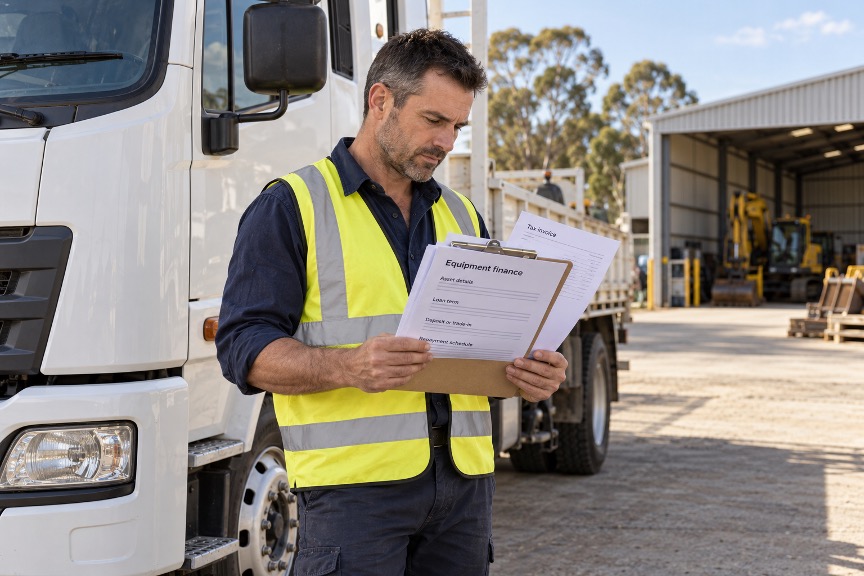
Preparation also affects how smoothly the process runs. In our experience the most common cause of delay in equipment finance is an incomplete or incorrect tax invoice, such as the wrong billed-to or delivered-to details or a missing year of manufacture or serial number, so it is worth checking the supplier’s invoice carefully before it is submitted.
Ways to Secure a More Competitive Heavy Equipment Loan Rate
No business controls economic conditions or lenders’ funding costs, but there are practical steps that strengthen an application and support a more competitive rate.
- Have the application matched to the right lender. This has the greatest bearing on the rate a business is offered. Rather than accepting the first quote, particularly dealer finance offered at the point of sale, have a broker assess which lender’s policy suits your asset, your industry and your profile, so the application goes once to a lender that is likely to view it favourably.
- Keep your credit file clean and your records current. Meeting ATO, supplier and finance obligations on time protects both the business and director credit files, and having BAS, an asset and liability statement and a schedule of existing commitments on hand means a lender that asks for them can assess the application without delay.
- Choose a term that matches the working life of the equipment. A shorter term reduces total interest where cash flow allows, whereas a term that outlasts the productive life of the asset means paying for equipment that is no longer earning income.
- Model your repayments with an equipment finance calculator. Our equipment finance calculator lets you test different amounts, terms and rates so you can see the effect on monthly repayments and plan your budget before you commit.
Equipment Finance vs Asset-Based Loans: Which Structure Suits Your Business?
Heavy equipment finance is one form of asset-based lending. A chattel mortgage, finance lease or hire purchase agreement is designed for a specific purpose, which is to fund the acquisition of a particular piece of equipment, with that equipment securing the finance.
Not every business that owns or needs equipment is looking to make a new purchase, however. Some already own a fleet of machinery, trucks or plant outright, or have built up equity in property and other business assets, and the more pressing need is working capital to fund a contract, bridge a seasonal gap or support growth. In those situations a broader asset-based loan, secured against equipment, property or other assets the business already owns, can be a better fit than financing a single new purchase.
The main differences between the two structures are:
- Purpose: equipment finance funds the acquisition of a specific asset, whereas an asset-based loan releases funds against assets already held and can be used for broader business purposes.
- Security: equipment finance is secured by the equipment being purchased, whereas an asset-based loan may be secured by existing equipment, property or a combination of assets.
- Scale: asset-based loans arranged through Dark Horse range from $50,000 to $50 million, depending on the security available.
If you are weighing up whether to finance new equipment or release value from assets the business already holds, our guide to asset-based loan options explains how these facilities are structured and assessed. Businesses that expect to add several machines or vehicles over time may also find that an asset finance limit able to fund multiple assets works better than financing each one on its own.
Conclusion & Next Steps
Heavy equipment loan interest rates in Australia are not set figures that apply equally to every business. They reflect the age and type of the equipment, the term and structure of the finance, the credit history and trading record of the business and the policy of the lender assessing the application, which is why two businesses buying the same machine can be offered quite different terms.
Understanding those factors puts your business in a stronger position, and having the application matched to the right lender from a large panel, rather than relying on a single quote, is how a business finds terms that fit. Dark Horse Financial is a broker, not a lender, and we arrange equipment finance across banks, non-banks and private financiers. If you are planning an equipment purchase, get in touch with our team to discuss your options.
FAQs
There is no single good interest rate for heavy equipment finance in Australia, because the rate a lender offers depends on the age and type of equipment, the loan term, how the finance is secured and the business’s credit history. The best way to judge a rate is to have the application matched to a lender whose policy suits the asset and business, then assess the total cost including fees.
Heavy equipment loan interest is typically fixed, not variable. Chattel mortgages and other equipment finance products are generally written at a fixed rate for the full term, so the repayment stays the same from start to finish and budgeting is simpler. Because the rate is locked in for the term, it is worth checking before signing whether paying the loan out early would attract any fees or costs.
A bigger deposit does not typically lower the interest rate on equipment finance. A deposit or trade-in reduces the amount financed, which lowers repayments and the total interest paid, but it does not generally change the rate a lender offers. Many established businesses can finance equipment without a deposit, while newer businesses may need a contribution of typically 10 to 20 per cent.
Heavy equipment finance can still be available to a business with a lower credit score, as some non-bank and private lenders place more weight on the equipment, the trading performance of the business and its bank statements than on the score itself. Approval is never guaranteed and pricing will usually reflect the additional risk, but a lower score does not automatically rule a business out.
Most lenders can approve heavy equipment finance within a day or so, subject to their enquiry levels at the time, which is generally faster than traditional bank timeframes. For applicants who own property, more than one lender on the Dark Horse Financial panel uses automatic credit decisioning that can deliver an approval within an hour. Checking the supplier’s tax invoice before submission helps avoid the most common cause of delay.
Sources and Methodology
The content in this guide reflects what Dark Horse Financial sees day to day when arranging equipment finance with lenders on its panel. Repayments in the worked example were calculated on a standard principal and interest basis using illustrative rates, they are not current market pricing. Information current as at October 2026.
Disclaimer: This article is general information only and does not take into account your objectives, financial situation or needs. Any rates or figures shown are illustrative and do not constitute a quote or an offer of finance. All finance is subject to lender approval, terms and conditions. You should seek independent financial, tax and legal advice before making any decision. Dark Horse Financial Pty Ltd is a Credit Representative No. 465 325 of Buyers Choice Licencing Pty Ltd.
Secure the Best Rates for a Heavy Equipment Loan
We specialise in helping Australian businesses secure the financing they need to grow and thrive. Contact us today to learn more about our heavy equipment financing options and how we can help you secure the best interest rates for your business.